




Certificates
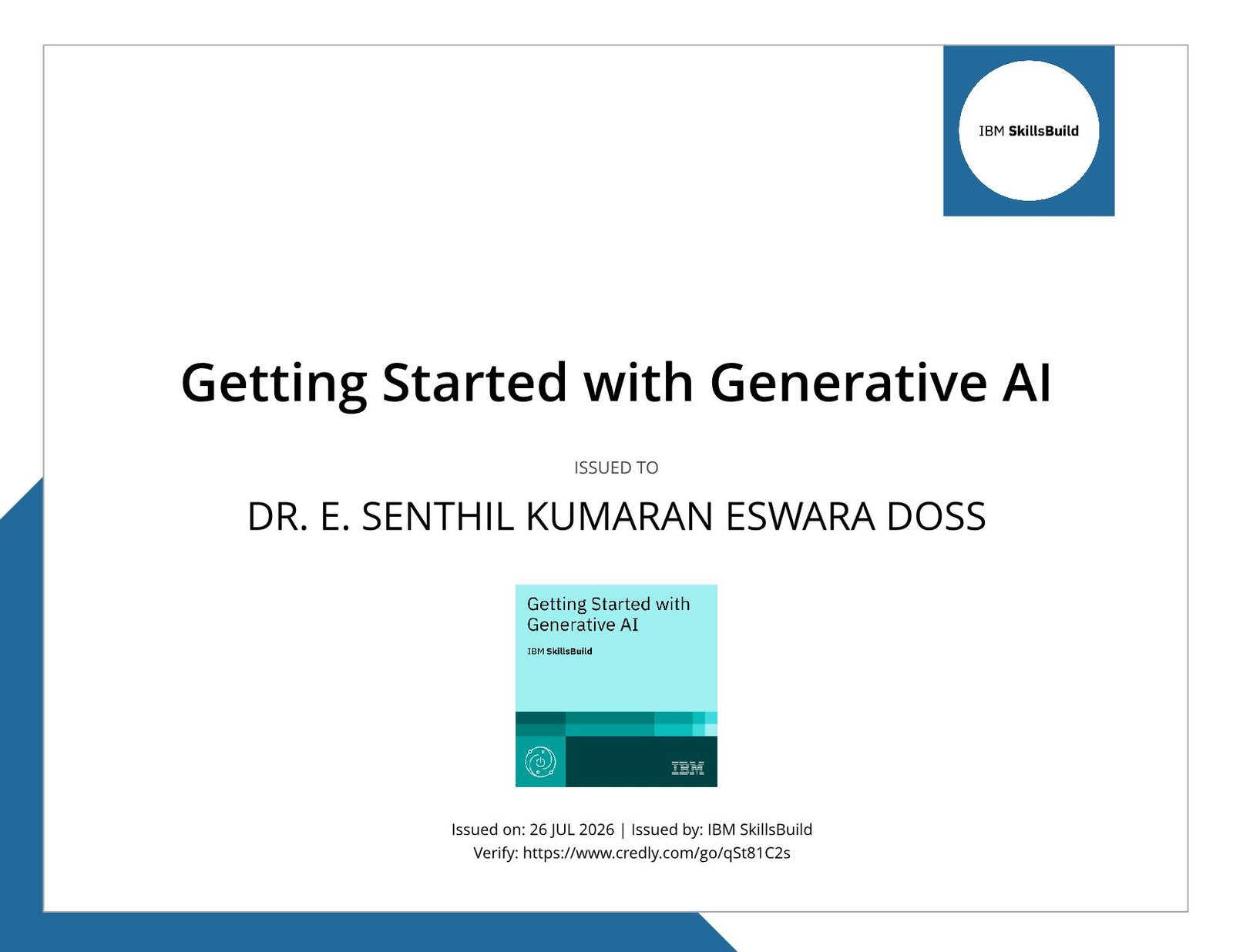
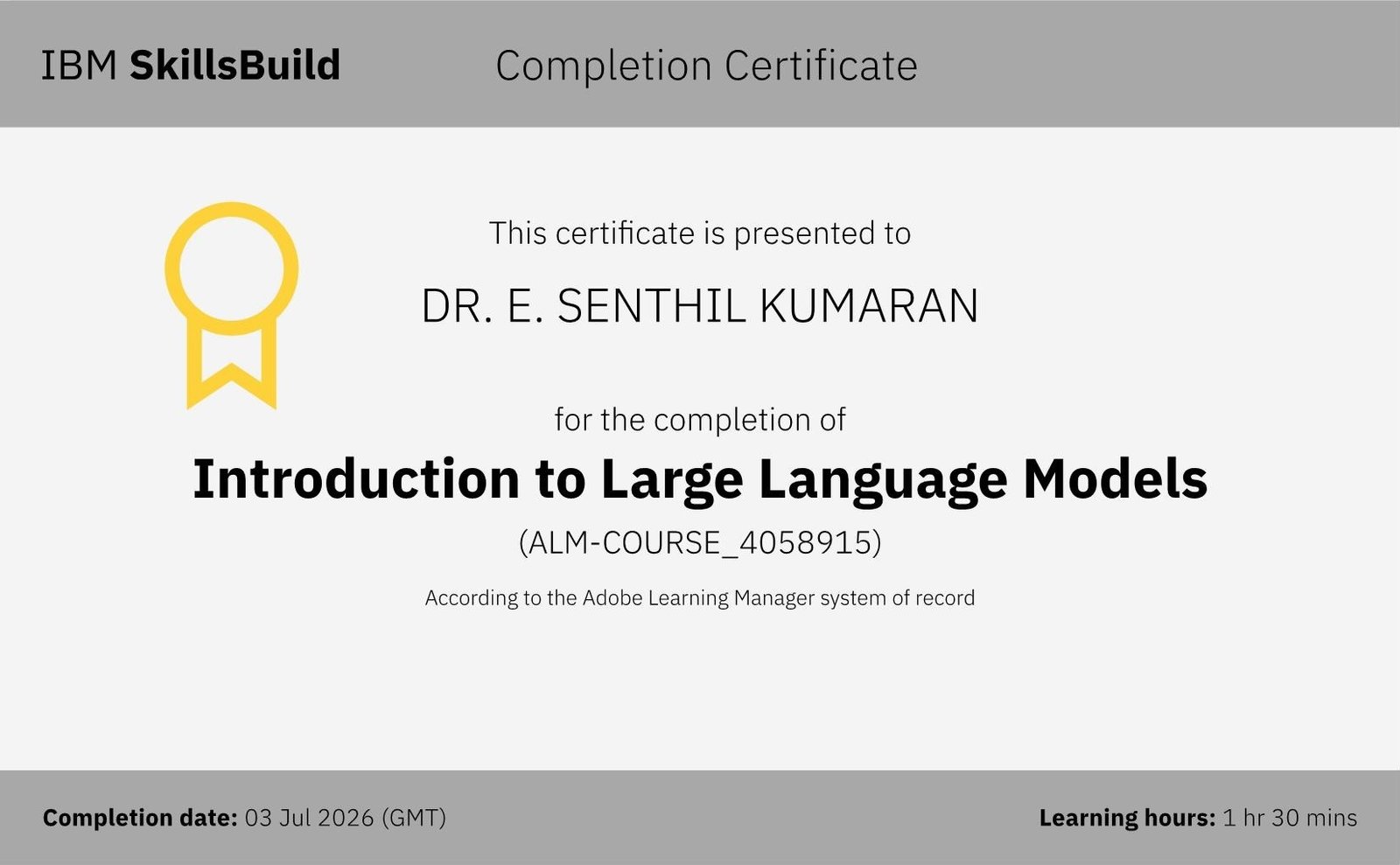
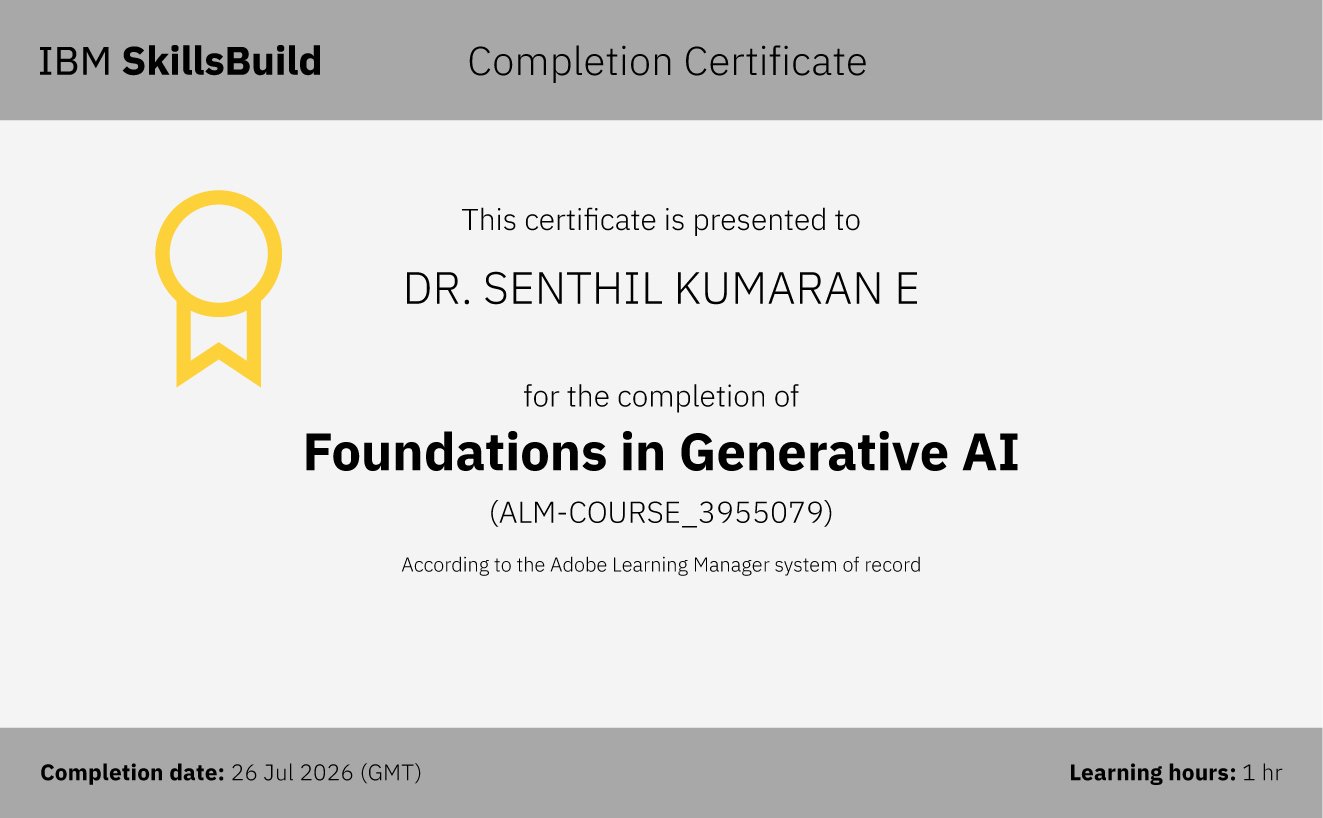
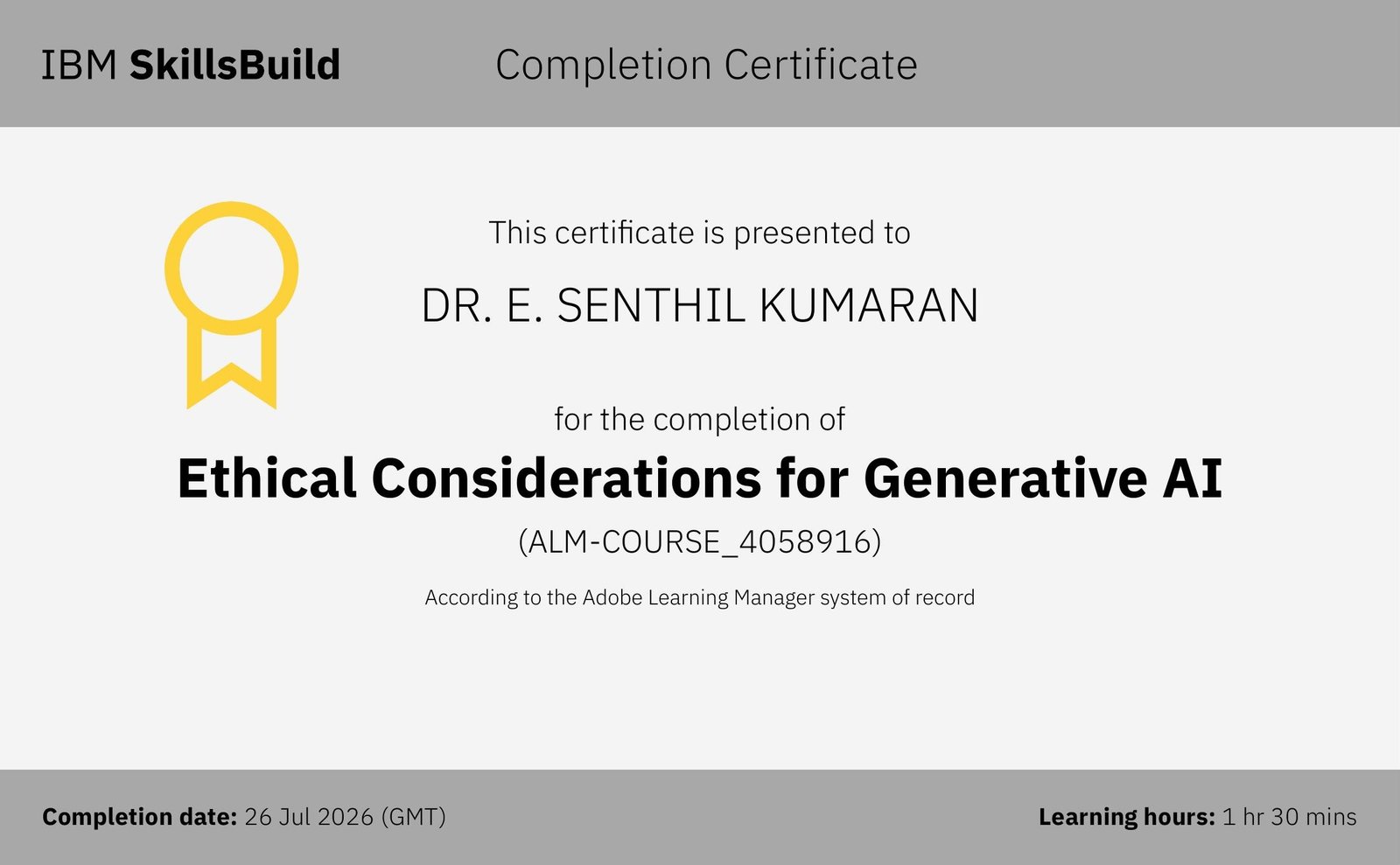
Certificates are shown exactly as issued by IBM SkillsBuild / Adobe Learning Manager at the time of each completion.
What this credential represents
Are you interested in learning about generative artificial intelligence? This credential covers the foundational concepts of generative AI — how machines create content such as text and images — through clear examples and explanations. It also explores the ethics of generative AI, including transparency, accountability, and fairness, along with the risks in AI inputs and outputs and the IBM AI Risk Atlas as a resource for understanding potential impacts. Finally, it covers how large language models (LLMs) are applied in practical scenarios such as customer service and content creation, with a focus on guiding IBM Granite models effectively.
- Apply prompt refinement techniques to improve the quality of AI-generated responses
- Explore the IBM AI Risk Atlas
- Craft a product blog post with IBM Granite
Skills earned
What Dr. Senthil studied
Introduction to Large Language Models
Large language models are transforming how businesses handle everyday tasks — creating content, answering questions, and analyzing data quickly. This course covers how to apply LLMs in real-world situations such as customer service and content creation, and explores the unique features of IBM Granite models and how to guide them with clear instructions.
Topics covered:- Key use cases for large language models
- Functions of IBM Granite models
- Effective prompting techniques to guide LLMs in performing targeted tasks
- Overview of large language models
- Types of IBM Granite models
- Effective prompting techniques for large language models
- Simulation: Crafting a product blog post with IBM Granite
Foundations in Generative AI
Generative AI is making it possible for machines to write stories, design artwork, and even compose music. This course covers the foundational concepts of generative artificial intelligence, with a focus on how machines create text, images, and other content — building a working vocabulary and basic understanding of how generative AI systems operate.
Topics covered:- The steps in the generative AI process
- How large language models generate text based on input prompts
- Tasks that generative AI is best suited to perform
- Prompt refinement techniques to improve the quality of AI-generated responses
- Overview of generative AI
- How do models learn to generate
- Generative AI in everyday life
- Crafting precision prompts with generative AI
Ethical Considerations for Generative AI
Generative AI can create original content in response to a prompt — but what happens when that same technology inadvertently spreads misinformation, reinforces harmful stereotypes, or breaches privacy? This course explores the fascinating and complex world of ethics as they relate to generative AI, covering transparency, accountability, and fairness, along with the risks tied to data inputs and AI-generated output.
Topics covered:- The ethical pillars of transparency, accountability, and fairness in generative AI
- Ethical considerations and risks related to data inputs in AI tools
- The ethical implications of managing AI-generated content
- The IBM AI Risk Atlas as a resource for understanding potential impacts
- Ethics in the use of generative AI
- Managing the ethics of AI inputs for data
- Managing the ethics of AI-generated content
- Simulation: Exploring the IBM AI Risk Atlas